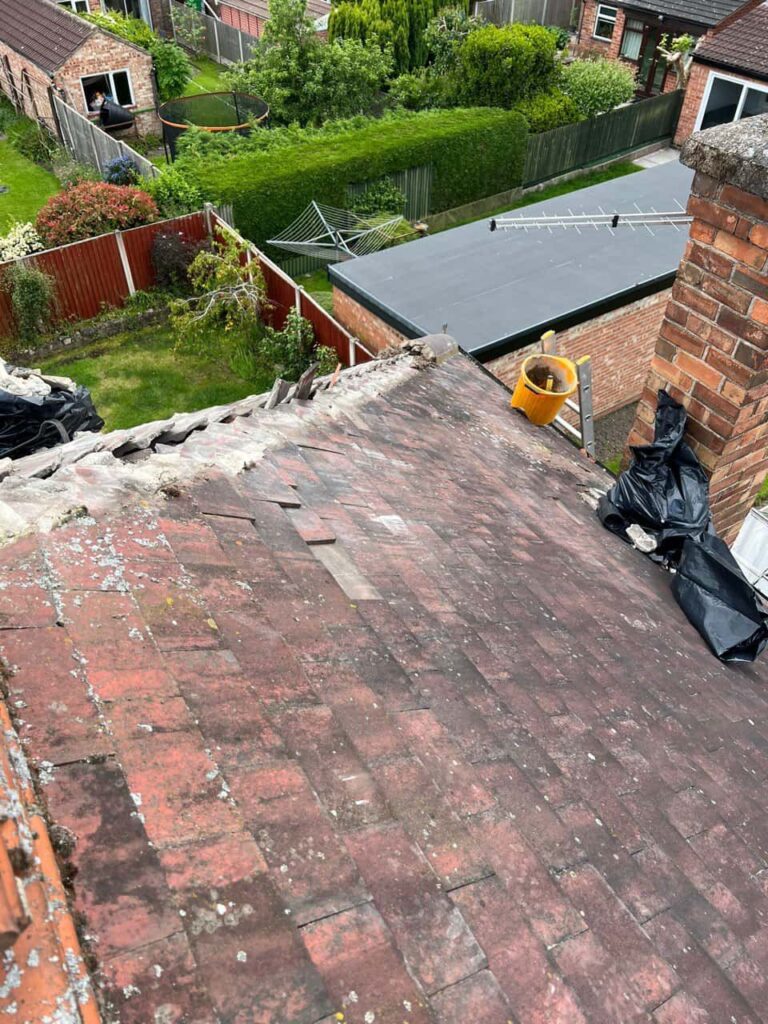
Roof leaks do not always behave in the same way during every spell of wet weather. A roof may appear to cope with ordinary rainfall, only for water to enter the property when heavy rain is accompanied by strong winds. This often happens because wind changes the direction and force with which rain reaches the roof, exposing weaknesses that might otherwise remain unnoticed.
For property owners in Earl Shilton, Leicestershire, understanding why wind-driven rain can make an existing leak worse is important for identifying potential roofing problems before they lead to more extensive internal damage. A professional inspection from Earl Shilton Roofing Repairs can help establish where water is entering and what repairs may be needed.
How Strong Winds Change the Way Rain Reaches a Roof
During calm conditions, rain generally falls towards the roof in a downward direction. Roof coverings are designed to shed water away from the building, with overlapping tiles, slates and other materials helping to prevent moisture from reaching the underlying structure.
Strong winds can alter this pattern by pushing rain sideways and upwards beneath vulnerable sections of the roof. Water may be forced against joints, beneath tile edges or towards areas that are not normally exposed to direct rainfall.
This can make even a relatively small defect more noticeable. A loose tile or deteriorating flashing might not allow much water through during light rain, but persistent wind-driven rainfall can force moisture into the opening.
Common Roofing Problems That Allow Wind-Driven Rain to Enter
Several roofing defects can contribute to leaks becoming more severe during windy weather.
Loose or Displaced Roof Tiles
Roof tiles rely on their correct positioning and overlapping arrangement to protect the roof beneath them. If a tile becomes loose, cracked or displaced, the gap can provide an entry point for rain.
Strong winds may also move weakened tiles further out of position, increasing the opening and allowing more water to reach the roof underlay or battens.
Damaged or Deteriorating Roof Flashing
Flashing is used around vulnerable junctions, including chimneys, roof abutments and other changes in roof structure. It helps direct water away from areas where different surfaces meet.
If flashing has lifted, cracked or developed gaps, wind-driven rain can be pushed behind it. Water may then travel beneath the roof covering before appearing inside the property.
Worn Roof Valleys and Junctions
Roof valleys collect and channel rainwater from adjoining roof slopes. Because they handle concentrated water flow, damage or deterioration in these areas can create a significant risk of water ingress.
Strong winds can push rain towards valley edges and joints, making existing weaknesses more likely to allow moisture through.
Damaged Underlay and Roof Membranes
The underlay provides an additional layer of protection beneath tiles or slates. If it has become torn, brittle or poorly secured, it may no longer prevent water from reaching the roof structure.
This can be particularly problematic when wind pushes rain beneath the outer roof covering, as the damaged membrane may be unable to contain or direct the moisture safely towards the eaves.
Why Roof Leaks Can Appear Away from the Original Defect
One reason wind-related roof leaks can be difficult to identify is that water does not always appear directly beneath the damaged area.
Once moisture passes through the roof covering, it can travel along rafters, battens, insulation or other structural surfaces before reaching a ceiling. This means that a damp patch in an upstairs room may be some distance from the actual point of entry.
Property owners in Earl Shilton should therefore avoid assuming that the most visible internal stain identifies the precise roofing defect. Finding the source requires checking the surrounding roof components and understanding how water could be travelling through the structure.
Warning Signs to Look for After Wind-Driven Rain
Some signs of a roofing problem may become more noticeable following periods of strong winds and heavy rainfall. These include:
- New or expanding damp patches on ceilings and upper walls.
- Water marks around chimney breasts or roof junctions.
- Peeling paint or bubbling plaster near the ceiling.
- A musty smell in loft spaces.
- Damp insulation or visible moisture around roof timbers.
- Roof tiles that appear uneven, loose or out of position.
Not every leak will produce immediate internal signs. Some moisture may remain within the roof structure before becoming visible, which is why investigating recurring problems is important.
Why Prompt Roof Repairs Matter
Repeated exposure to moisture can gradually affect more than the roof covering itself. Persistent dampness may damage insulation, encourage timber deterioration and contribute to mould growth in poorly ventilated spaces.
A temporary improvement during dry weather does not necessarily mean that the underlying problem has been resolved. If water continues to enter whenever rain is driven by strong winds, the original defect may still be present.
Earl Shilton Roofing Repairs can inspect vulnerable roof areas, including tiles, flashing, valleys and other junctions, to help identify the source of water ingress. Appropriate repairs can then restore the roof’s ability to shed rain and protect the property.
Homeowners should avoid climbing onto a roof during or immediately after strong winds. An inspection by an experienced roofing professional is a safer way to assess suspected damage.
Conclusion
Roof leaks can become considerably worse when rain is driven by strong winds because moisture is pushed against vulnerable joints, beneath loose tiles and into gaps that may not cause problems during ordinary rainfall. Damaged flashing, worn underlay and displaced roof coverings can all contribute to water entering the property.
For homeowners in Earl Shilton, Leicestershire, recurring leaks during windy weather should not be ignored. Identifying the original point of entry and arranging suitable repairs can help prevent further moisture damage. If your roof is allowing water in during periods of strong winds, contact Earl Shilton Roofing Repairs to arrange a professional inspection and discuss the most appropriate solution.
Call us on: 01455 249 592
Click here to find out more about Earl Shilton Roofing Repairs
Click here to complete our contact form and see how we can help with your roofing needs.